Do We All Have ADHD? Or Is Social Media Lying to Us?
Reflections from a mental health pharmacist and yoga teacher
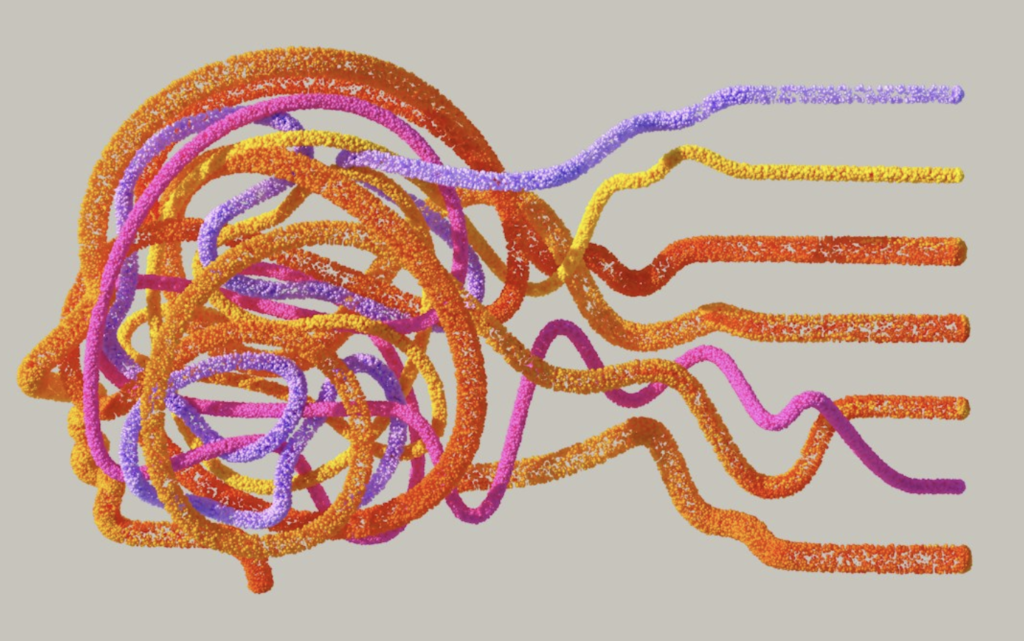
If you spend any amount of time on social media, you’ve probably seen it:
“Signs you might have ADHD.” “If you do these 10 things, you probably have ADHD.” “POV: you have ADHD.”
You might recognise yourself in some of these. You procrastinate. You lose your keys. You struggle to start boring tasks. You have 27 tabs open (don’t we all?). Sometimes you hyperfocus for hours. You’re easily distracted.
So… do we all have ADHD? No.
But social media has changed the way we understand and relate to ADHD.
ADHD content online isn’t entirely wrong, it’s just not the whole story
I watched the Channel 4 doc The Great ADHD Myth a few weeks ago. I was actually pleased to see yoga and other holistic lifestyle approaches mentioned (though these could have been explored in much more depth).
But it failed to show that ADHD treatment is more than just a choice between medication or nothing.
The Royal College of Psychiatrists also responded to the documentary, emphasising that 3 to 5% of the population have ADHD and thus it remains ‘under-recognised, under-diagnosed and under-treated in the UK.’
Guidance notes that ADHD is recognised less often in women and girls, partly because women more commonly present with inattentive symptoms that can be harder to recognise and are better at ‘masking’.
ADHD is more than a checklist of symptoms
A problem with social-media ADHD content is that it can reduce a complex neurodevelopmental condition to a collection of relatable behaviours.
Honestly, we can all get distracted. Most of us procrastinate sometimes. We struggle to concentrate when we’re tired, stressed, or overwhelmed.
ADHD is characterised by functional impairment that deeply impacts someone’s life. Professional assessment is key to explore this in detail and take into account their developmental history.
A diagnosis isn’t just finding a label that explains your difficulties. It should help you understand yourself.
And understand what support will actually make your life better.
Is medicaiton good? Is medication bad?
I am a pharmacist prescriber, I know ADHD medication works. The evidence will tell you it works.
But medication is not a magic wand. Nor is it meant to be.
National guidelines in the UK (NICE) recommends medication for adults when ADHD symptoms continue to cause significant impairment even after environmental modifications have been implemented and reviewed. It also recommends considering non-pharmacological treatment, including counselling, therapy, coaching and parent-training programmes.
Medication is not a lifelong, fixed prescription. Things are allowed to change. Patients can start, stop and take breaks from medication to suit their needs.
ADHD diagnosis and treatment has to be individualised and person-centred.
What about Yoga?
This is where my two worlds meet.
I started practised yoga in 2015, and over the years it has become much more than just physical movement.
Yoga teaches us to pause. To breathe.
To sit with discomfort.
To observe our thoughts without immediately acting on them.
To notice what our bodies are trying to communicate to us. And these are skills that are incredibly valuable for a person with ADHD.
Research into mindfulness and mind-body interventions for ADHD is developing. A recent systematic review suggests potential benefits for ADHD symptoms and functioning.
NICE already recommends healthy lifestyle measures including regular exercise and healthy nutrition for people with ADHD, alongside environmental modifications and appropriate psychological and pharmacological treatment.
The questions isn’t “Medication vs Yoga or therapy?” The question is:
“What does this person need?”
Neurodiversity means no two brains are the same. Two people can have the same diagnosis and completely different experiences.
That’s why we have to think about the person, and not just the diagnosis.
When your 9-5 meets your 5-9
My 9–5 is mental health, medicines and ADHD.
My 5–9 is yoga, movement, mindfulness, wellbeing and community.
This is why I’m so passionate about bringing together my two worlds. And the more I learn, the less I see these as separate.
Psychology and yoga are both tools for developing self-awareness.
They can help us become curious about our thoughts, emotions, behaviours and bodies rather than judging ourselves for them.
Journaling can help you notice patterns.
Mindfulness can help you create a pause between an experience and your response.
Movement can help you reconnect with your body.
Time in nature can create space away from constant stimulation.
Community can reduce isolation and create belonging.
And psychological therapies such as CBT can give us practical strategies for understanding and changing patterns that aren’t serving us.
None of these are a cure or magic wand. And none of them needs to be.
They can simply become part of our self-care toolkit.
So.. Is social media lying to us?
Yes and no.
There is now research showing just how variable the quality of ADHD information online can be.
One study analysing the top 50 TikTok videos using #ADHDtest found that 92% were misleading when compared with a validated ADHD screening tool.
But the answer isn’t to stop talking about ADHD online.
The answer is better information.
And better support.
References
- Royal College of Psychiatrists (2026). RCPsych statement on Channel 4 ADHD documentary. 19 August 2026. Royal College of Psychiatrists
- National Institute for Health and Care Excellence (NICE). Attention deficit hyperactivity disorder: diagnosis and management (NG87) — Recommendations. NICE NG87: ADHD diagnosis and management
- Kim, H. & Jung, N. (2025). Mindfulness-based interventions for adults with ADHD: A systematic review and meta-analysis.
- Verma, S. & Sinha, S. (2024). How evidence-based is the “hashtag ADHD test” (#adhdtest). A cross-sectional content analysis of TikTok videos on attention-deficit/hyperactivity disorder (ADHD) screening

2026